

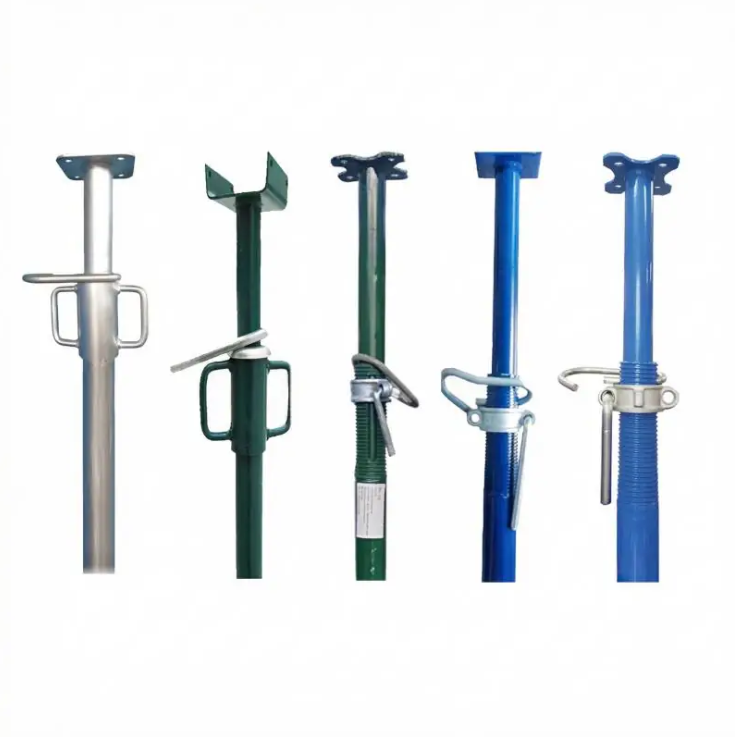
Temporary support plays an important role in construction projects, especially during concrete pouring, formwork installation, and structural reinforcement stages. Although many products on the market look similar in appearance, their actual performance can vary due to differences in material quality, manufacturing methods, adjustment structures, and load capacity design.
For contractors, distributors, and construction companies, choosing suitable support equipment requires more than checking appearance or price. Understanding the factors behind product performance helps buyers select solutions that match different project conditions and site requirements.
Understanding the Factors Behind Performance Differences
Steel props are widely used in temporary support applications because they can provide adjustable height and flexible installation options. However, not all products have the same working stability. The quality of steel tubes, welding accuracy, and adjustment components can influence the overall performance during construction.
Material selection is one of the important factors affecting durability. High-quality steel tubes can provide stable structural strength, while inconsistent materials may influence load-bearing ability during long-term or repeated use. This difference becomes more noticeable in projects that require frequent installation and dismantling.
Manufacturing precision also affects how smoothly a prop works on-site. Proper welding, accurate tube processing, and reliable connection parts help create a more stable support structure. These details are often difficult to judge only by looking at the finished product.
For buyers searching for adjustable steel props, it is necessary to consider both product specifications and actual application needs. Factors such as working height, expected load, and construction environment should be reviewed before making a purchasing decision.
Comparing Structure Design and Adjustment Methods
The internal structure of a steel prop directly affects installation efficiency and support stability. A common design includes inner and outer steel tubes that allow workers to adjust the height according to different construction requirements.
The adjustment system is another important difference between similar products. A well-designed pin and threaded adjustment mechanism allows faster positioning and helps maintain secure support after adjustment. This design is commonly used for formwork and shoring applications where temporary structures need regular changes.
Different projects may require different working ranges and load capacities. Residential buildings, commercial projects, industrial facilities, and infrastructure construction may have different support conditions. Therefore, selecting a suitable specification is more practical than choosing a product based only on general appearance.
When customers evaluate adjustable steel props for sale, they often need to compare wall thickness, working height, surface treatment, and available sizes. These details can influence whether the product fits the specific requirements of a project.
Exploring Product Features for Construction Applications
In temporary support systems, product consistency is important because construction teams depend on reliable performance during different stages of work. Steel props need to maintain stable positioning while supporting concrete slabs, beams, ceilings, and formwork systems.
Rongze provides temporary support solutions designed for construction applications. Its adjustable steel props are made from high-quality steel tubes with precision welding and feature an adjustable inner and outer tube structure. The design allows quick height adjustment and supports efficient installation and dismantling on-site.
The company supplies products with different sizes, wall thicknesses, working heights, and load capacities to meet various project requirements. Surface treatments include painted, powder-coated, electro-galvanized, and hot-dip galvanized finishes, allowing buyers to select options based on environmental conditions.
For projects that require improved corrosion resistance, galvanized finishes can be considered. This type of surface treatment helps the equipment adapt to different working environments and supports repeated use when properly maintained.
Choosing Products Based on Project Requirements
Selecting temporary support equipment requires a clear understanding of the project environment. Construction teams should evaluate factors such as floor structure, support height, expected usage frequency, and installation conditions.
A product suitable for one project may not be the right choice for another. For example, a site with different ceiling heights may require adjustable ranges that are different from a standard building project. Load requirements can also influence the selection of tube specifications and support capacity.
Suppliers should provide clear technical information so buyers can compare products more effectively. Details about materials, adjustment methods, surface finishes, and available configurations help construction companies make practical decisions.
Rongze works with construction-related customers by providing steel support products for different application scenarios. Their product range includes options designed for temporary support of concrete slabs, beams, formwork systems, and other structural elements.
Making Practical Decisions for Temporary Support
Similar-looking steel props may have different performance levels because their differences often exist inside the structure rather than on the surface. Material quality, manufacturing accuracy, adjustment systems, and specification choices all influence how the products perform during construction.
For buyers looking for adjustable steel props for sale, understanding these factors can help reduce selection risks and improve project planning. A detailed comparison of technical information is more useful than focusing only on appearance or initial cost.
With proper evaluation, construction companies and distributors can select support equipment that matches their project requirements. Choosing suitable specifications and reliable manufacturing standards helps create a more efficient and stable temporary support process.


