

Furniture frames and fitness equipment often rely on tubular parts that must align accurately during welding and assembly. A chair frame may require matching holes on several legs, while gym equipment can involve repeated mounting points, crossbars, and angled connections.
Selecting a fiber laser tube cutter means considering how consistently these features can be produced across different sizes and production batches, not simply how quickly a tube can be cut. Hymson Laser Machinery provides tube-processing equipment for varied manufacturing needs, while the right application setup depends on the geometry, tolerances, and workflow of each fabricator.
Designing Repeatable Hole Patterns
Hole patterns influence both assembly speed and structural performance. Furniture rails may require mounting holes at fixed intervals, whereas fitness frames can include multiple openings for bolts, adjustment pins, or accessory brackets. If the distance between holes varies from part to part, assembly fixtures may no longer align properly. Production drawings should therefore identify the critical dimensions and reference points used to locate each feature.
Rotational positioning becomes especially important when openings appear on different sides of a tube. A hole on the upper face may need to align with another feature on the underside or sidewall. Small angular deviations can shift the second feature away from its intended position, even when each hole has the correct diameter. Test parts should include multi-face patterns to verify that programmed rotation and linear movement produce the required geometry.
Feature spacing also affects the cutting sequence. Closely positioned holes or slots can leave narrow sections of material between cuts, so the cutting sequence and remaining material should be evaluated for thermal effects and structural integrity. Nesting and sequencing should account for the tube’s dimensions and the stability of the finished component. A carefully planned pattern can improve consistency without changing the functional design.
Matching Tube Profiles to Component Design
Furniture and exercise equipment use more than round tubing. Square and rectangular sections are common in table legs, storage frames, benches, and gym racks because their flat faces simplify mounting and joining. Round tubes may suit handles, support bars, and components where a curved profile is desirable. The selected equipment must accommodate the required tube profiles and dimensions, including outside dimensions, wall thickness, and stock length.
Material selection adds another layer of complexity. Carbon steel is frequently used for structural frames, while stainless steel may be preferred for applications requiring corrosion resistance or a particular appearance. Aluminum can reduce component weight, but its processing behavior differs from that of steel. Fabricators should verify material grade and thickness before establishing cutting parameters instead of assuming that one setting will suit every tube.
End cuts and notches deserve attention alongside hole geometry. Angled ends may need to meet another tube at a precise joint, while notches must allow intersecting components to fit with minimal gaps. Poorly matched joints can increase welding time and create inconsistent finished frames. Testing representative connections helps confirm whether the cut geometry supports the intended assembly method.
Maintaining Consistency Across Production Batches
Repeat orders require more than a saved cutting program. Material batches may differ in dimensions, straightness, surface condition, or wall thickness, and these variations can affect clamping and finished-part accuracy. Incoming checks should identify stock that falls outside the approved range before it reaches the cutting stage. Recording material details alongside the job number also makes later quality investigations easier.
For a fiber laser tube cutter, program management helps prevent avoidable errors when several products share similar dimensions. A furniture workshop might manufacture different chair frames using the same tube size but distinct hole spacing. Clear file names, revision tracking, and controlled access to approved programs reduce the risk of using an outdated pattern. Operators should verify the job identity and critical settings before processing a production batch.
Inspection frequency should reflect the part’s function and production risk. Initial samples can be checked for overall length, hole diameter, feature spacing, and angular alignment. Subsequent checks can focus on critical dimensions at defined intervals, with additional inspection after a material or setup change. Consistent measurement methods make comparisons between shifts more meaningful and help identify process drift before it affects a large quantity of components.
Evaluating Handling, Automation and Equipment Range
Production efficiency depends partly on how tubes move through the workshop. Long stock requires sufficient loading clearance and stable support, while finished components need organized collection to prevent damage or mix-ups. Manual handling may be adequate for occasional custom orders, but higher-volume furniture and fitness production can benefit from automated loading or unloading where compatible with the workload. The decision should reflect actual batch sizes and changeover frequency.
Cycle time should include the work surrounding the cut itself. Loading, positioning, program selection, unloading, inspection, and any required deburring all contribute to the time needed for an acceptable component. A demonstration using a realistic hole pattern and representative tube length provides more useful evidence than a short cut on a simple sample. Recording both processing time and manual intervention helps reveal where productivity gains are possible.
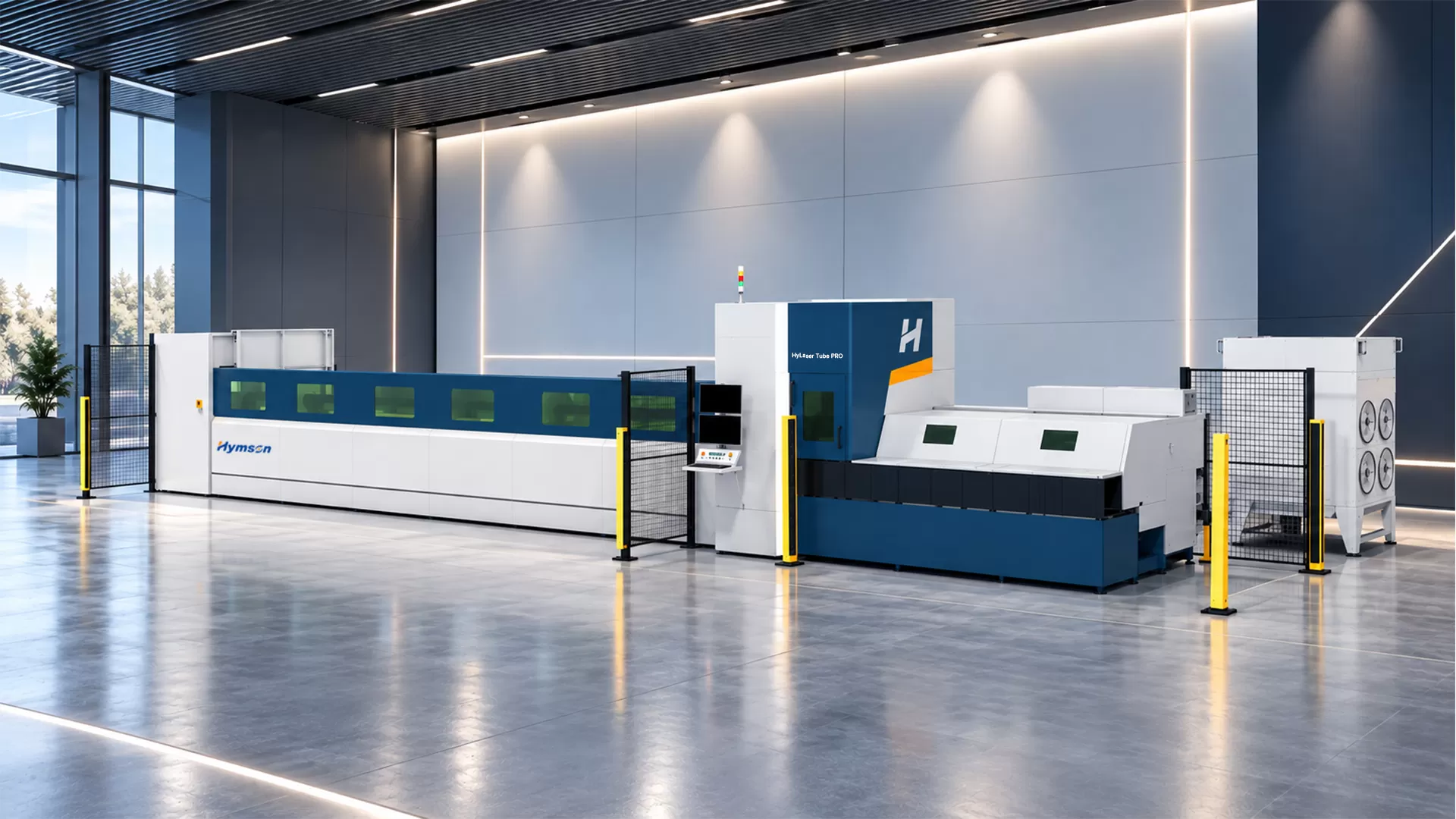
The HyLaser Tube PRO is specified for tube processing lengths of up to 6,500 mm, providing a concrete reference for manufacturers evaluating long-stock applications. A fabricator considering this model should verify that the selected configuration supports the required profile shapes, dimensions, materials, and production features. Actual suitability depends on the full technical specification, not length capacity alone, so representative furniture or fitness components should be used during application testing.
Conclusion
Consistent tubular components make furniture assembly more predictable and help fitness equipment meet its intended structural and functional requirements. Accurate hole patterns, compatible joints, controlled material variation, and traceable programs all contribute to repeatable results across production batches.
Before investing in a tube laser cutting machine, fabricators should test parts that reflect their real designs and examine the entire workflow, from stock loading to final inspection. Hymson Laser Machinery can be evaluated against these application-specific requirements, with the final decision guided by verified specifications, measured sample quality, and the factory’s production priorities.


