

Selecting an optimal energy storage topology represents one of the most critical decisions during modern commercial and industrial solar deployment. Evaluating whether to channel generated photovoltaic power directly through a centralized hybrid inverter or route it via secondary alternating current pathways determines overall system efficiency and scalability.
Behind these architectural choices stands Ktech, an engineering-driven manufacturer specializing in energy management systems and custom power hardware solutions. By combining self-developed control software with adaptable hardware platforms, the company provides global distributors and integrators with durable, stable equipment backed by comprehensive technical support.
Understanding Primary Energy Pathways in Photovoltaic Systems
Solar panels naturally produce direct current electricity, which must be converted before powering standard electrical loads or supplying power grid infrastructure. Coupling methods dictate where this conversion occurs within the circuit, directly influencing total round-trip conversion efficiency.
In DC-coupled setups, photovoltaic energy flows straight into energy storage through a shared controller before undergoing a single DC-to-AC conversion. Conversely, AC-coupled systems require multiple conversion steps, converting solar power to alternating current before rectifying it back to direct current for battery charging.
Analyzing Round-Trip Conversion Loss Patterns
Every power conversion phase introduces thermal losses and minor energy drops across internal switching components. Minimizing these unnecessary transformations preserves optimal power output, especially during periods of peak solar production.
DC-coupled topologies maintain higher efficiency when charging storage banks directly during daytime hours. Because energy avoids redundant conversion steps, operational losses remain low across routine daily charge and discharge cycles.
Evaluating High-Voltage Battery System Dynamics
Modern commercial power architectures increasingly favor high-voltage storage solutions to reduce current levels, minimize cable dimensions, and decrease thermal resistance. Higher operating voltages greatly boost energy transfer efficiency for large-scale facilities.
System designs supporting 150-800V high-voltage batteries allow system integrators to build compact, scalable energy storage arrays. High-voltage compatibility streamlines system balance, reduces installation complexity, and stabilizes power delivery under heavy demand.
Addressing Over-Panelling Ratios for Maximum Energy Yield
Sizing solar array capacities higher than nominal inverter AC output allows facilities to capture significant additional energy during low-light hours. This practice, known as DC oversizing, maximizes total daily yield without overloading internal electronics.
Architectures featuring an AC-DC matching ratio that can reach 2 times enable systems to capture early morning and late afternoon solar energy effectively. Excess power is redirected into energy storage rather than wasted through clipping mechanisms.
Optimizing Solar Tracking Precision Across Dynamic Conditions
Environmental factors like changing cloud cover, ambient temperature shifts, and localized shading alter photovoltaic array output continuously. Fast-acting maximum power point tracking algorithms are essential for capturing peak available solar energy.
Integrating controllers with MPPT tracking efficiency up to 99% resolves yield loss challenges across varying weather conditions. High-precision tracking ensures that solar arrays operate at optimal power points regardless of sudden environmental fluctuations.
Integrating Auxiliary Diesel Generation for Mission-Critical Power
Off-grid facilities and weak-grid industrial sites frequently rely on backup diesel generators to maintain operation during extended periods of low solar output. Merging generator inputs into a solar-storage system requires sophisticated synchronization control.
Equipment that supports diesel generator connection allows seamless power blending during grid outages or extended overcast conditions. Automated secondary source management keeps critical operations online while optimizing fuel consumption.
Expanding Commercial Capacity with Parallel Processing
As enterprise energy needs expand, scaling system capacity without replacing existing infrastructure becomes vital for cost-efficient growth. Parallel operation capabilities enable multiple units to function as a unified, synchronized power plant.
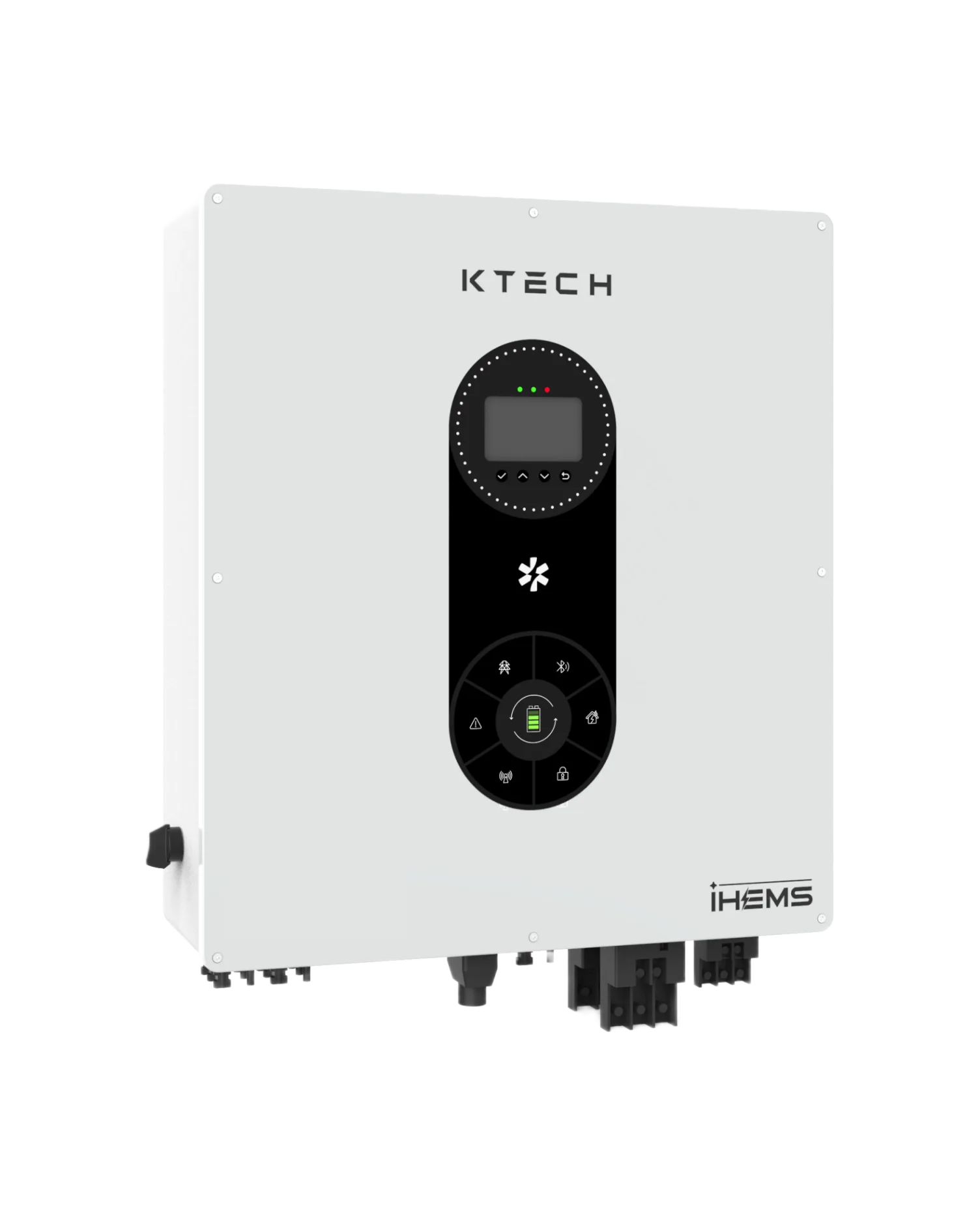
Deploying systems where up to 10 units parallel operation is supported allows facilities to scale overall output linearly. Commercial facilities can deploy the Hybrid Inverter 30-60kW Three Phase American Grid unit to achieve flexible power expansion across complex multi-phase installations.
Implementing Comprehensive Electrical Protection Standards
Commercial solar installations demand rigorous circuit protection mechanisms to safeguard high-voltage equipment and maintain site safety. Comprehensive protective protocols reduce operational risks and ensure compliance with strict regional grid standards.
Modern commercial installations require systems compatible with Arc-Fault Circuit Interrupter (AFCI), Ground-Fault Circuit Interrupter (GFCI), and Rapid Shutdown (RSD) safety technologies to prevent electrical fires and phase ground faults. The Hybrid Inverter 30-60kW Three Phase American Grid model incorporates these safety features alongside an Ingress Protection (IP) rating of IP66 Ingress Protection rating for exceptional hardware durability.
Managing System Diagnostics Through Centralized Cloud Control
Maintaining broad visibility across multi-site commercial deployments requires real-time diagnostic reporting and remote parameter adjustment capabilities. Centralized software visibility simplifies facility management and reduces physical maintenance visits.
Utilizing platform ecosystems developed by Ktech Solar gives technical teams actionable insights into operational metrics, fault history, and battery performance. System integrators leverage these centralized cloud tools to deliver proactive service and optimize long-term uptime.
Conclusion
Determining whether AC-coupled or DC-coupled power management performs better depends on specific site requirements, existing infrastructure, and operational expansion goals. Modern power architectures combine high conversion efficiency with flexible protection protocols to support demanding commercial applications.
Collaborating with Ktech grants access to flexible product customization, robust original manufacturing, and responsive technical support engineered for global distributors. Energy professionals seeking reliable hybrid inverter solutions are encouraged to submit inquiries and explore tailored OEM/ODM distribution opportunities today.


